

Jumbo Loans

Jumbo home loans are mortgage loans used to finance properties that exceed the conforming loan limits set by the Federal Housing Finance Agency (FHFA). In 2025, the conforming loan limit is $806,500 in most counties. Homes that exceed this limit require a jumbo loan.

Because jumbo loans are not guaranteed by Fannie Mae or Freddie Mac, they’re considered non-conforming loans. That means the lender assumes more risk and as a result, qualification standards are generally higher. Jumbo loans can be used for primary residences, vacation homes, or investment properties and are available with both fixed and adjustable interest rate options.

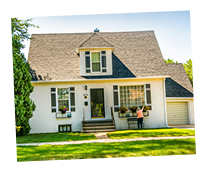
Jumbo home loans are mortgage loans used to finance properties that exceed the conforming loan limits set by the Federal Housing Finance Agency (FHFA). In 2025, the conforming loan limit is $806,500 in most counties. Homes that exceed this limit require a jumbo loan.

Because jumbo loans are not guaranteed by Fannie Mae or Freddie Mac, they’re considered non-conforming loans. That means the lender assumes more risk and as a result, qualification standards are generally higher. Jumbo loans can be used for primary residences, vacation homes, or investment properties and are available with both fixed and adjustable interest rate options.

A jumbo loan is designed for borrowers purchasing high-value properties that exceed standard loan limits. Unlike conventional conforming loans that can be sold to Fannie Mae or Freddie Mac, jumbo loans remain on the lender’s books which gives lenders flexibility in setting terms but also leads to stricter borrower requirements.

  • Finance homes above the conforming loan limit, often exceeding $806,500 (or $1,209,750 in high-cost areas).
  • Available for primary, secondary, and investment properties up to four units.
  • Choose between fixed or adjustable interest rate options.

  • Offers flexible term lengths
  • Competitive interest rates for qualified borrowers with strong financial profiles.

Because jumbo loans are not backed by Fannie Mae or Freddie Mac, lenders face more risk when approving them. That’s why the eligibility standards are typically stricter than conventional loans. Borrowers generally need strong credit, stable income, and substantial assets to qualify.

Most lenders look for a credit score of 680 or higher, though some may require 700+. You’ll also need to demonstrate a low debt-to-income (DTI) ratio, often below 43%, to show that you can comfortably manage your current debts along with a higher mortgage payment. Down payments usually range from 15% to 40%, depending on your credit, income, and the loan amount.

Lenders also verify that you have adequate cash reserves, which may include several months of mortgage payments in savings or liquid assets. These reserves reassure the lender that you can handle your payment even if your income changes. In addition, an independent home appraisal is required to confirm the property’s value before the loan can be approved.

The key difference between a jumbo loan and a conventional loan is the loan limit. Conventional loans follow guidelines set by the Federal Housing Finance Agency (FHFA) and can be purchased or guaranteed by Fannie Mae or Freddie Mac. Jumbo loans, on the other hand, exceed those limits and are considered non-conforming, meaning lenders carry all the risk themselves.

Because jumbo loans aren’t insured or guaranteed, lenders apply stricter qualification requirements, including higher credit scores, larger down payments, and stronger income documentation. However, jumbo loans often provide more flexibility in loan terms, property types, and financing structures.

While conventional loans are ideal for average-priced homes and first-time buyers, jumbo loans cater to buyers purchasing luxury or high-value properties. Despite the higher loan amounts, interest rates for jumbo loans have become more competitive, often aligning closely with conventional mortgage rates.

Because these loans exceed conforming limits, lenders face greater risk and they pass some of that responsibility to the borrower. That means stricter qualification standards, larger down payments, and more financial documentation. You’ll need stronger credit, lower debt, and more cash reserves than you would for a conventional mortgage.

Another consideration is the higher total cost. Even if the interest rate is competitive, you’re borrowing a much larger amount of money. That means higher monthly payments, more interest paid over time, and larger property tax and insurance bills.

Get customized rates tailored to your mortgage needs right here, right now.
Join our happy customers and experience the difference today.

Other Loan Programs

FHA Loans

FHA home loans are mortgage loans that are insured against default by the Federal Housing…

VA Loans

The VA Loan provides veterans with a federally guaranteed home loan which requires no down…

Conventional Loans

A conventional loan is a type of loan that doesn’t have government backing or insurance,…
White house with orange rooftop with lawn

HELOCs

Your home is more than just a place to live. It’s also one of your…
elderly couple chatting in a kitchen

Reverse Mortgage

A reverse mortgage is a type of loan available to homeowners who are 62 years…